KNOWLEDGEDfAM3 MIN READ
Build orientation and part strength
Orientation changes how the build layers relate to the load. We compare specimen data for PA12, PA11 and TPU 90A, use PA11 CF as an example, and explain what a technologist needs before printing.
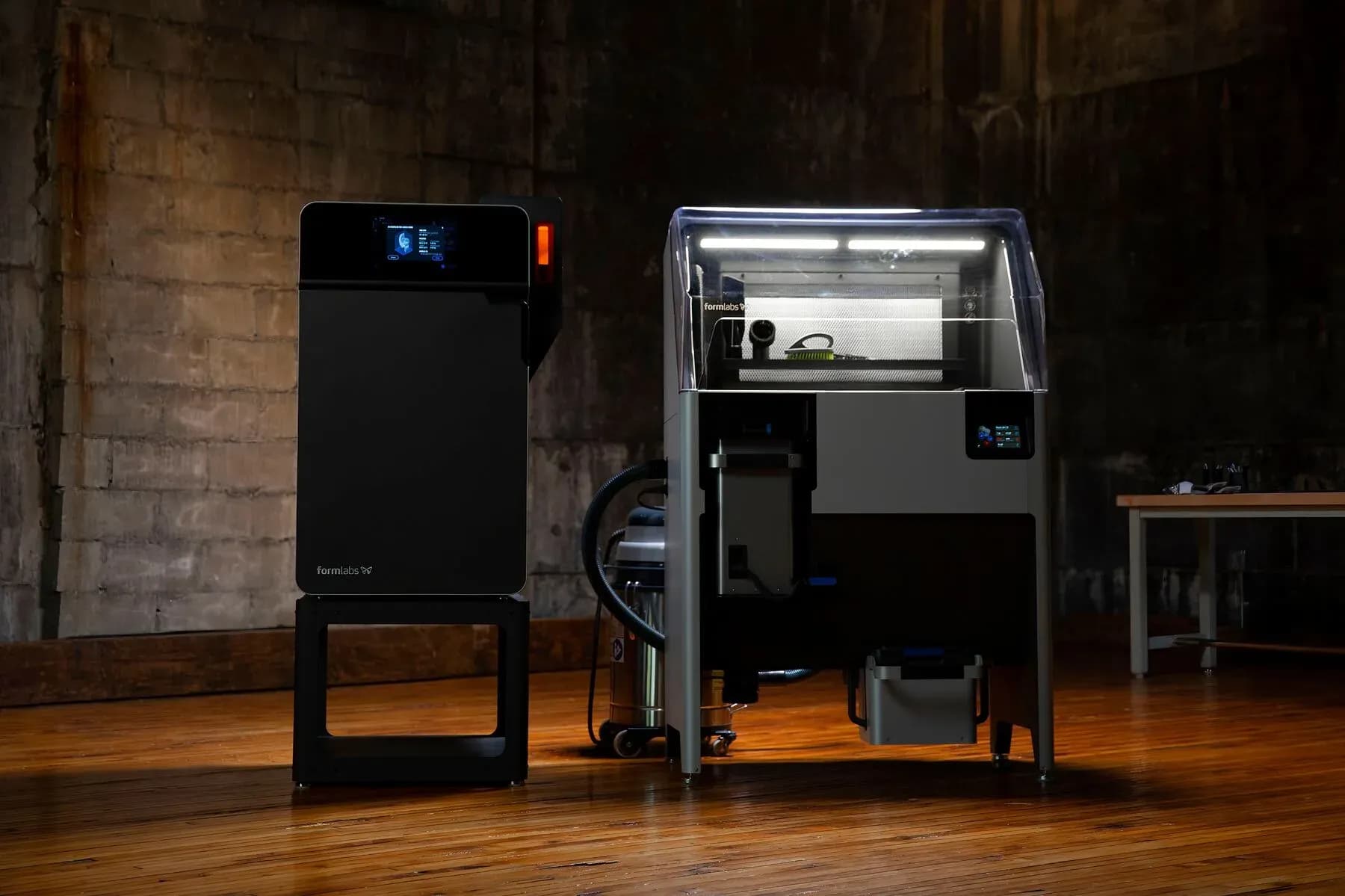
Load direction and mounting help determine orientation in the build chamber. Datasheets show differences between test axes; assessing a part also requires its geometry, temperature and type of loading.
PA11 CF: results along three axes
Nylon 11 CF, a carbon-fibre-filled polyamide, gives a clear example of anisotropy. We use it to compare axes; PA11 CF is not listed in our powder catalogue. Its TDS reports specimen results under ASTM D638-14 Type 1:
- Tensile strength: 69 MPa (X) · 52 MPa (Y) · 38 MPa (Z)
- Tensile modulus: 5.3 GPa (X) · 2.8 GPa (Y) · 1.6 GPa (Z)
- Elongation at break: 9% (X) · 15% (Y) · 5% (Z)
The greater than threefold X/Z modulus difference refers to these specimens. Rotating a model alone does not guarantee that change in the stiffness of the finished part.
Where does this difference come from
Z is the build direction; X/Y is the powder-spreading plane. Formlabs describes a tendency for PA11 CF fibres to align along X, so the difference between X and Y also matters. A result along one axis does not describe every load case.
PA12, PA11 and TPU 90A
Each powder has its own results and scope of published data:
- PA12: elongation at break 11% in X/Y and 6% in Z (ASTM D638 Type 1). These are specimen strains at break; they do not determine fatigue cycles or time to part failure.
- TPU 90A: elongation at break 310% in X/Y and 110% in Z (ASTM D412-16 Method A), tear resistance 66 kN/m in X/Y and 39 kN/m in Z (ASTM D624-00). Seal selection also requires compression, medium and temperature.
- PA11: notched impact strength 71 J/m (ASTM D256-10), elongation at break 40% in X/Y (ASTM D638-14 Type 1). This datasheet does not publish a separate Z elongation result. The 40% figure does not define reversible snap-fit deflection.
PA12, PA11 and PA11 CF datasheets describe conditioning for 7 days at 50% relative humidity and 23 °C. The TPU 90A sheet does not specify the same protocol. Results depend on geometry, orientation and temperature.
Rules derived from this
- Identify force direction and mounting. For each loaded feature, review the relevant material and test-axis data.
- For a snap fit, hinge or clip, assess the cross-section, tensile direction during bending, transition radii and required number of cycles.
- Assess thin ribs and long bridges for distortion during printing and powder removal as well.
- The manufacturer recommends orienting hole and pin axes in Z for accuracy. A critical fit requires a drawing, a test or agreed hole machining.
- Plan cut threads and metal inserts together with orientation.
Conflict: strength versus chamber fill
Rotating a part changes how many units fit in the 165 × 165 × 300 mm chamber. Force direction depends on how the part is mounted in the device, so placing it upright does not itself mean a Z load. Build layout considers mechanical requirements, fits, cleaning access and spacing.
What to include in the inquiry
To review orientation, we need:
- Force direction, magnitude and duration; for cyclic operation, the number of cycles.
- Mounting points and critical surfaces and dimensions, preferably on a drawing.
- Snap fits, hinges and other bending features, with their range of motion.
- Temperature, humidity and chemical contact, including concentration and exposure time.
Describe loading in the model notes. A technologist reviews the scope before confirming the quotation. Go to the calculator.
Sources: Formlabs Nylon 11 CF TDS (PDF), Nylon 12 TDS (PDF), Nylon 11 TDS (PDF), TPU 90A TDS (PDF) and Fuse Series SLS Design Guide.